
Countermagic for the Equinox

Updated: Mar 21
Each fallen leaf is trapped by spell of steel,
Crimped like fern in the quartz atmosphere;
Repose of sculpture holds the country still.
What countermagic can undo the snare
Which has stopped the season in its tracks
And suspended all that might occur?
— Sylvia Plath, Prologue to Spring (excerpt), 1955

Happy Vernal Equinox! Today marks the first day of spring—a moment of exquisite balance, when day and night meet in equal measure. As the sun aligns directly with the equator, reaching its zenith, light begins its gentle triumph over darkness. The earth stirs awake: shoots push through soil, we emerge from winter stillness, and the air itself feels charged with possibility.
This seasonal threshold has long been honored across cultures. Ostara, a Pagan solar holiday, celebrates the warmth of the returning sun, the renewal of life, and the fertile energy of awakening. It is a time rooted in balance and becoming—a quiet but powerful turning toward growth, color, and vitality.
This week in Advanced Studio in person at 180 Franklin Avenue, in a session I (Meridith) lead, we welcomed the season by celebrating Ostara in true AYB fashion: with food, ritual, conversation, and making. The studio filled with the scent of lemony spring pasta (recipe included!) and the buzz of creative energy as we began crafting Ritual Headpieces for the Equinox.

We opened with a lively discussion of spring rituals—cleaning, planting seeds, coloring eggs, and celebrations like Passover and Easter. Together we unpacked language as a way into the season: vernal, from the Latin vernalis, meaning “of the spring,” and verdant, meaning green, flourishing, and full of life. These words became touchstones as we explored visual traditions of seasonal adornment—crowns, bonnets, helmets, and ceremonial headwear. Jacob shared his beautiful collection of handmade spring yarmulkes, while I brought examples of my own paper crowns to spark ideas.
Spring headgear examples from presentation
From there, we moved into making. Artists chose their own materials and approaches—cutting, gluing, coloring, collaging, sculpting. Flo contributed an incredible array of sculptural supplies—wire, strapping, twine—which quickly became essential tools in bringing bold and unexpected forms to life.
Making crowns for the equinox
Of course, no celebration is complete without a bit of fanfare: we staged an impromptu Ostara fashion show, which allowed me to photograph images of artists wearing their creations. The room was full—new and returning participants alike—and Leah even brought Bruce (a highlight, as you’ll see in the photos). In addition to my Lemony orzo with asparagus and green peas, Ty prepared a delicious spread, including pizza and a tarte Tatin with fresh crème, while Jules curated a vibrant spring playlist that carried us through the session.

LEMONY SPRING PASTA SALAD
(Double for Advanced Studio)
Our edible ode to the equinox.

Ingredients
Lemony Dressing
• 1 ½ tablespoons finely grated lemon zest
• ¼ cup fresh lemon juice
• ½ small shallot, chopped
• 1 ½ tablespoons honey
• ¾ teaspoon Dijon mustard
• Sea salt and ground black pepper, to taste
• ½ cup olive oil
Pasta Salad
• ¾ lb asparagus, trimmed
• 1 cup shelled green peas
• 1 lb small pasta (penne, orzo, small rotini, baby shells, or orecchiette)
• 1 ½ cups cooked chickpeas (1 can, drained & rinsed)
• 3 scallions, finely sliced
• 6–7 radishes, sliced
• ½ cup flat-leaf parsley, chopped
Instructions
• Make the dressing: In a blender, combine lemon zest, lemon juice, shallot, honey, Dijon mustard, salt, pepper, and olive oil. Blend until smooth and creamy. Set aside.
• Prepare the vegetables: Fill a large bowl with ice water and set aside. Bring a large pot of salted water to a boil. Add chopped asparagus and cook for 2 minutes, until just tender. Add peas and cook briefly until bright green. Using a slotted spoon, transfer vegetables to the ice bath to stop cooking.
• Cook the pasta: Return water to a boil. Add pasta and salt generously. Cook according to package instructions. Drain well and transfer to a large bowl. Add chickpeas and toss immediately with about two-thirds of the dressing.
• Combine: Drain the asparagus and peas thoroughly. Add them to the pasta along with scallions, radishes, parsley, and remaining dressing. Toss well to combine.
• Finish: Season to taste with additional salt, pepper, lemon juice, or herbs as desired. Serve at room temperature.
We closed with critique, which unfolded full of laughter, generosity, and shared delight in one another’s work. Personal anecdotes included Evelyn's memories of their 7 year old birthday crown making party and the gorgeous floral crown made for their mother.
Little Evelyn in blue top, and crown for mother's birthday by Evelyn Beliveau
It was a joyful beginning to the season!
AYB Artist Adji Ngathe Kebe lead us in a fabulous Advanced Studio session on Zoom inspired by the work of Aboriginal Artist Emily Kam Kngwarra.

Adji recaps: “I wasn’t familiar with the work of Emily Kam Kngwarray, until I saw her work at the Tate Museum. I was there to see Nigerian Modernism, and right next door was her exhibit. I knew I had to go see it afterwards. The exhibit began with a brief history Alhalkere, which is the Anmatyerr name of one of the desert locations in Utopia, Australia, where she is from. This information was crucial to understand Kngwarray’s art, because she loved her homeland. Every art piece she has created is in reverence to the land, its people, animals, even the roots of certain plants.

Kngwarray described her artwork as “everything.” It encompasses every feeling, emotion, and dream she’s had about Alhalkere. This expansiveness is felt through the sheer size of the paintings, and its content. Some of Kngwarray’s canvasses are as large as 20ft by 9ft. She would lay out the canvas on the floor and begin to work. Her art style is characterized by a series of dots moving throughout the canvas. When I first saw the paintings, I thought the dots were just placed randomly. It turns out she would choose either the left or right side of the canvas to start with. She followed a specific pattern. She would start with dots running across in parallel lines, layering paint over, and over again. She used different sized brushes, and different colors. The color choices on the canvas depended on the mood or feeling she wanted to represent. The more colorful, and bright, the more positive. She used both of her hands while painting. She can have a larger brush on one hand, and a smaller brush on another. She would pound the bristles down, which created that explosive effect. She wasn’t delicate with her brushes. She would use the brush hairs, as well as the neck of the brush, known as a ferrule.
Artworks by Dami Famuyiwa, Adji Ngathe Kebe, Karla Prickett, Florian Kiniffo-Neven du Mont, and Ajani Russell.
Teaching about her process was really important to this lesson because there’s a certain awe you feel looking at the pieces. She was able to create so much movement due to the technique she used. Through the process of creation, I wanted people to experience a similar awe. She was methodical in her approach and she was intentional because the subject of her artwork mattered to her. During the exhibit, you got to hear ceremonial chantings in her native language of Anmatyerr. It made the paintings seem like they were moving to the rhythm of the chanting. Whatever spirit Kngwarray put through the art work was coming alive and moving to the rhythm. This aliveness was felt in all of the pieces created during the Zoom lesson. There was so much creativity and inventiveness. Hearing the process each artists went through to create the pieces, made the artworks more impactful.”
Artwork by Aaron W., Travis Pereira, Rachel Palmer, Meridith McNeal, Sounya Kiniffo-Neven du Mont,
Florian Kiniffo-Neven du Mont, and Hannah Butcher.
AYB Artist Evelyn Beliveau reports on this week's ART YARD Art Matters in the School programs at both PS 6 and PS 17:
"Dennis and I (Evelyn) returned to PS 6 early—on Tuesday instead of Friday, due to a school holiday—to continue the lesson “Echoes of PS 6,” inspired by the work of Faith Ringgold. We had a busy day with our classes in Grade 1, Grade 3, and mixed Grades 3, 4, and 5.

We started by reviewing our progress from last time (self portrait drawings on 9x12-inch watercolor paper) and the inspiration for the lesson, Ringgold’s 1980 quilt Echoes of Harlem. Just as the quilt brings together portraits of Ringgold’s friends and neighbors in her neighborhood of Harlem, our project will ultimately be assembled into a wall-size paper “quilt” of classmates’ self portraits.

This week, we introduced the medium of watercolor paint to add color to the self portraits and patterned borders that students have drawn. I demonstrated at the board, going over all our supplies: mirrors, paint brushes, water cups, paper towels, and dishes of watercolor paint from a limited selection of paint tubes (chosen to mirror the palette in Ringgold’s quilt). While last week, we used the mirrors to examine the shapes of our faces and draw their outlines, this week we used the mirrors to look for the colors and lighter or darker areas of our faces. We used lamp black, burnt sienna (a warm medium brown), and Naples yellow-red (a peach or tan color) for skin tones, adding brighter hues like pink, yellow, and blue for accessories, clothing, and patterned borders.
Students worked on finding the perfect amount of water to use so the paint flows across the paper without soaking it. We had a few students who were absent last week, but they caught up quickly on the portrait-drawing steps, and many were able to start painting too. Each class made great progress, and while it’s always tough to leave a work in progress when you’re on a roll, they are well set up to jump back in next week."
Evelyn's sample and student painted self portraits in progress
Evelyn recounts: "We had a marathon day and a superstar team at PS 17 for the final day of the Women’s History Month project. Dennis, Simone, and I (Evelyn) were joined by Teaching Artists Chris Allen, Nick Tardiff, and Lionel (Leo) Emabat and were very glad for the additional help—the whole team was kept busy all day. We happily welcomed Chris to his first AYB experience; he jumped right into the fray and did an excellent job. And it was great to see Nick and Leo again, both of whom we've worked with on other lessons. All were invaluable.

Our task was to guide our Grade 4 and 7 classes to complete and assemble their life-size, half-length paper puppets to be used at next Wednesday’s Wax Museum event. (We didn't see our Grade 1 and 2 classes this week due to a schedule change.) Each puppet is done in the likeness of a historically significant woman, starting with pencil on a head-and-torso template on posterboard and finished in acrylic paint.
Most students had finished their pencil drawings, and many had begun painting in the first two weeks of this three-week project. The remaining steps were to finish painting the head-and-torso section of the puppet, paint the four arm segments (upper arms and forearms), cut out all the paper parts, reinforce the back of the puppet with a cardboard strip (doubling as a handle), fasten the arms with clasps, and add a dowel to one arm to perform gestures. With so much left to do, we knew our teaching team would likely need to finish some of these steps on student’s behalf, so we asked each class for their permission to do so.

Our first priority was making sure students got to make as much progress as possible on their puppets. With that in mind, we arrived early to take stock of progress and materials. Starting around 9:30am, Chris helped me sort students’ works-in-progress, match them to the correct nametags, and count up how many arm templates we had traced so far. As the rest of the team arrived, Chris and Nick covered tables with paper to protect from paint spills, and Dennis, Simone, and I began to cut out students’ puppets and (as the 11am class time approached) set them out at their seats with plates of acrylic paint in a range of skin tones.
We were grateful that both classes got some extra time with us this week—an extra 15 minutes for Grade 4 and an additional 45-minute class period for Grade 7. As soon as classes were in the room, our team was busy fielding questions, replenishing supplies, and sitting with students who needed extra support. I was impressed by the care that Leo, Chris, Nick, and Simone offered to students during those 1-on-1 conversations: patiently listening to questions, modeling drawing techniques, and offering encouragement when a student felt intimidated. Looking at the work, I can see what a difference it made to the confidence and accuracy of the drawings and paintings.

All students made significant progress on painting their head-and-torso puppet sections, many finished this step, and some even finished painting the arm sections. During class, Leo (an experienced teacher of the Wayang puppetry style) assembled one of the puppets whose sections were all completed and dried, and the effect was striking. I felt so heartened to see the first completed puppet, with its bold acrylic paint, eye-catching life-size scale, and moving arms that worked like a charm.

Between and after classes, our team collected the works-in-progress, washed brushes and water cups, and got to work on the remaining steps of the project. We divided up the work between cutting out puppets and arms, adding touches of paint to not-quite-finished faces, and painting arms for students who didn’t have time for that step (matching the colors to the skin tones and clothing colors the student had used on the main part of the puppet). Then came assembly: no small task, with dozens of puppets between our two classes. By the end of the day, all of the Grade 7 puppets and many of the Grade 4 puppets were completely finished and assembled (and are currently being flattened under planks to combat the curling of the paper, seen here).

We left the school at 6:30pm, almost four hours later than our usual end time! We are planning to return early next week to finish up the final group of puppets ahead of Wednesday’s event. All worth it to see students’ depictions of Alyssa Liu, Shirley Chisholm, and Taraji Henson—among many others—come to life!"
Other Art News
Ardelia and I (Meridith) spent an afternoon looking at shows in Chelsea. We recommend the following exhibitions:
At Michael Rosenfeld Gallery (100 11th Avenue), we loved Beauford Delaney: The Light Contained in Everything and William T. Williams: Word of Eye. The pairing worked well—Delaney’s saturated layered atmospheric paintings with Williams’ more structured, geometric compositions. Worth seeing them in dialogue. (Through April 4, 2026.). We came across some excellent street art on our walk uptown.
Ardelia viewing William T. Williams, Beauford Delaney and Street view W 26th St. Photos Meridith McNeal.
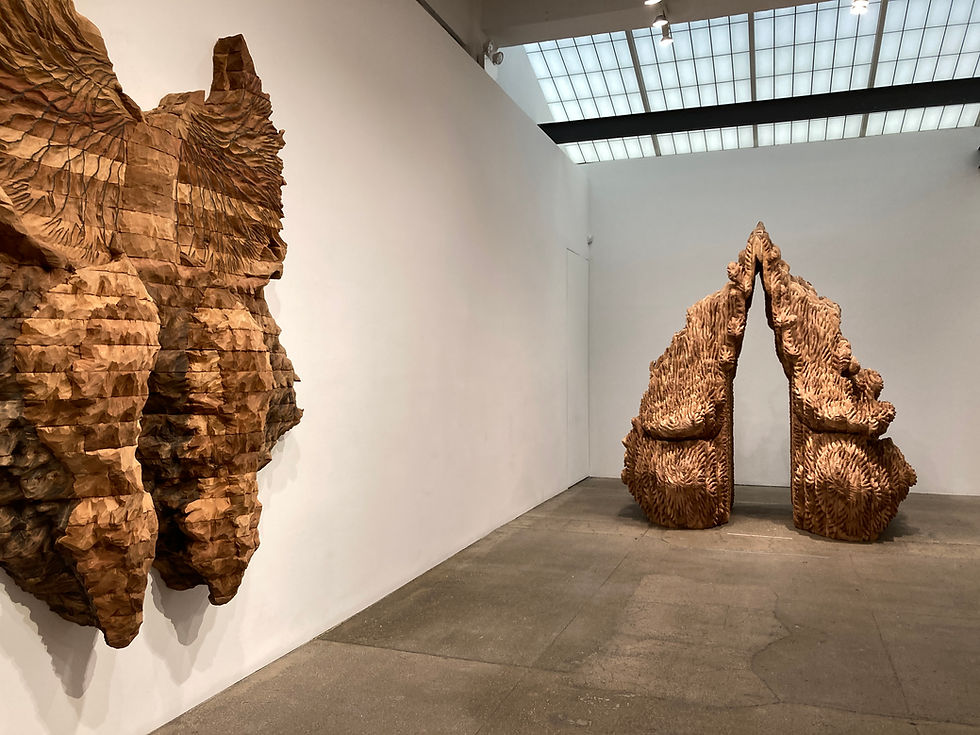
At Gallery Lelong (528 West 26th Street), Ursula von Rydingsvard’s large cedar sculptures which one can truly appreciate standing in proximity. (Through March 28, 2026.)
At Mary Ryan Gallery (515 West 26th Street), Christopher Cook is showing liquid graphite drawings built up in liquid layers, they are beautiful and mysterious. (Through March 21, 2026.)

AYB Artist Ed Rath will present Tell All the Truth But Tell It Slant: Reflections from a Professional Graphoanalyst at Salina Art Center in Salina, Kansas on Wednesday, March 25.

Ed has been working as a professional graphoanalyst—a person who analyzes handwriting using a system called Graphoanalysis—for 38 years. For Ann Resnick’s project Tell Me What You Think of Me, Ed analyzed numerous writing samples, looking at stroke formation and patterns of various features (loops, slants, pressure, size, and spacing) in the handwriting of project participants to assess complex features such as emotional responsiveness and depth, imagination, fears, defenses, social traits, and integrity. In his presentation, Ed will talk about the history and present-day uses of Graphoanalysis as a discipline using his findings for this project as illustrations.
AYB ADVANCED STUDIO ON VIEW IN LONDON
Hold Dear, curated by Jacob Rath and Lenika Silva, is currently being installed at Small House Gallery, London and will be on view through April 2026.
Leni writes: “After months of anticipation, our Hold Dear exhibition is finally arriving at Small House Gallery. Following a recent social media sneak peek of our micro-gallery space, we are thrilled to open our doors to the public.
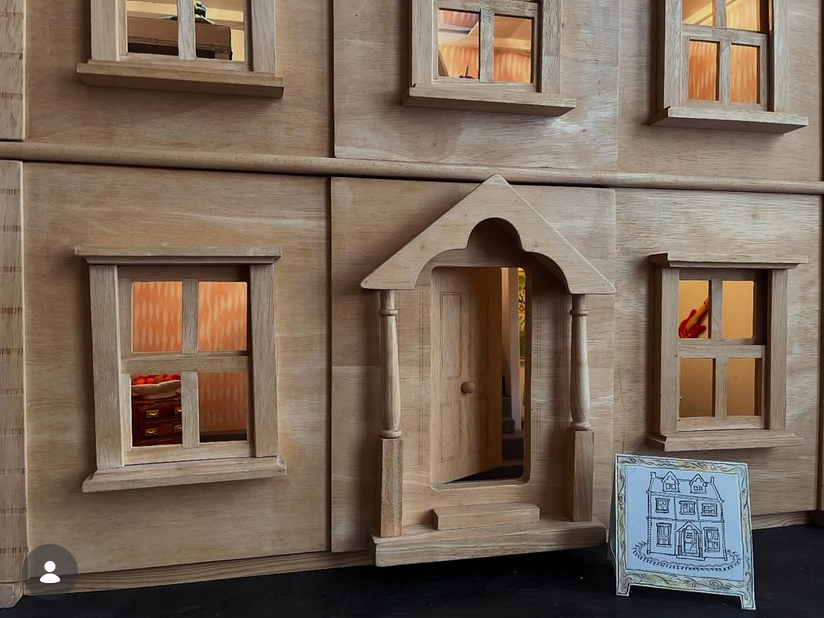
As a collaborative curator, I am incredibly proud of everyone who made this possible and immensely grateful for a platform that allows us to share our stories so intimately. This project is truly a labor of love. What began as a summer session class has blossomed into a beautiful opportunity to connect with art communities across the globe. For the first time, we will present both Hold Dear: Kept and Hold Dear: Left Behind, alongside the accompanying zines created by each artist. Together, these works capture the bittersweet essence of people, places, and objects that have left a lasting impact on our lives.”
🌸🌷🌼

Spring Crowns as festive décor and enjoyed by our pets!


Comments