
Take it easy
- frida@artyardbklyn.org

- 2 hours ago
- 12 min read
What does leisure look like to you?
With AYB Artist Adji Ngathe Kebe we answered this question in Advanced Studio on Zoom.
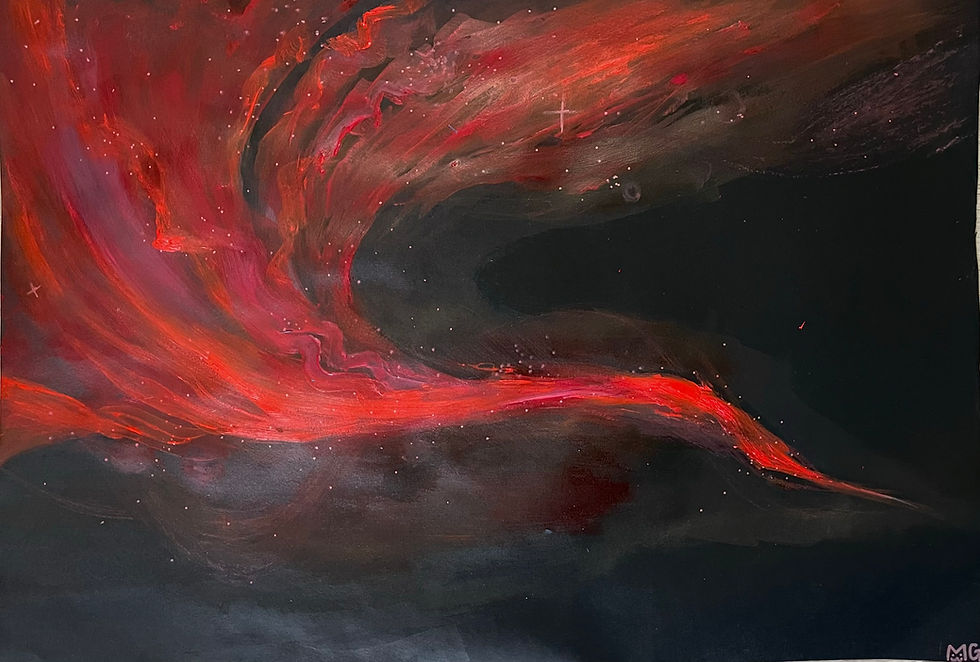
Inspired by the working methods and style of artists Danielle McKinney and Lindsay Adams we worked on black ground in the material of our choice to develop our artwork. It is one measure of success that participating artists continue work or a series of pieces inspired by an AYB session, there was a lot of that happening this week!



Danielle McKinney (left) and Lindsay Adams (right) with their work
Adji summarizes: “The lesson began as an exploration of creating from an all black canvas. We learned about two contemporary artists, Danielle McKinney, and Lindsay Adams. Danielle McKinney’s figures emerge out of the shadows through shades of brown, red, orange, and blue. They are resting, reading. Sometimes just gazing. She creates a world where Black women rest. She invites us into their interiority.

Lindsay Adams has a similar approach in her art, but she mostly creates abstracted works. In her latest exhibition, Soil, Adams starts with an all black canvas, and adds color by layering paint. Each of her paintings pay homage to the women in her family, and this is apparent in her piece, ‘Carrie Blue.’ It was named after her maternal grandmother. Adam’s works is characterized by short marks, jagged edges, which are balanced by softer brush strokes.

Applying the techniques and processes both artists used was challenging for some, while it felt comfortable for others. The work that came as a result is stunning. All the pieces have so much depth.”
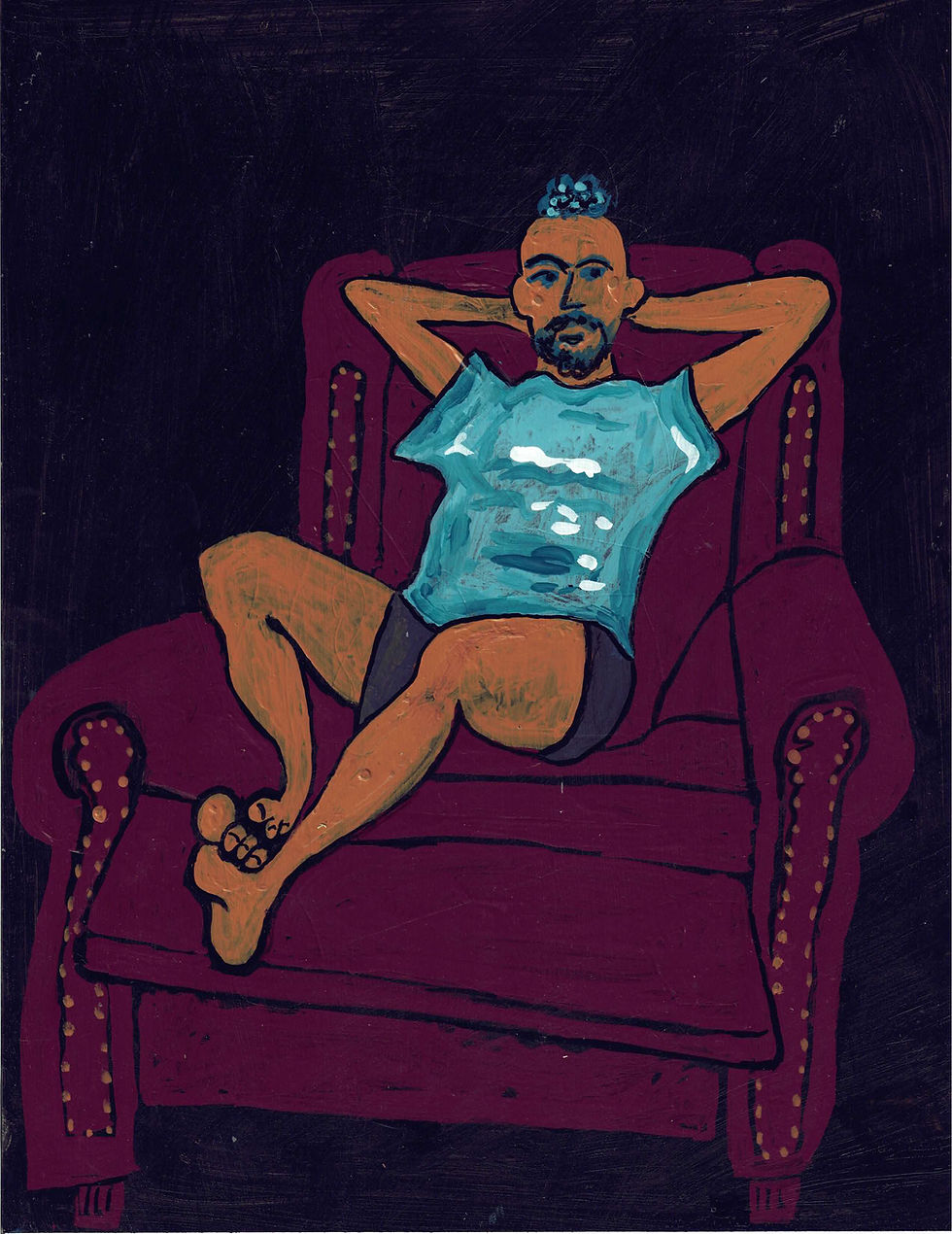
Adji and Aaron referenced the figures in Danielle McKinney’s work.

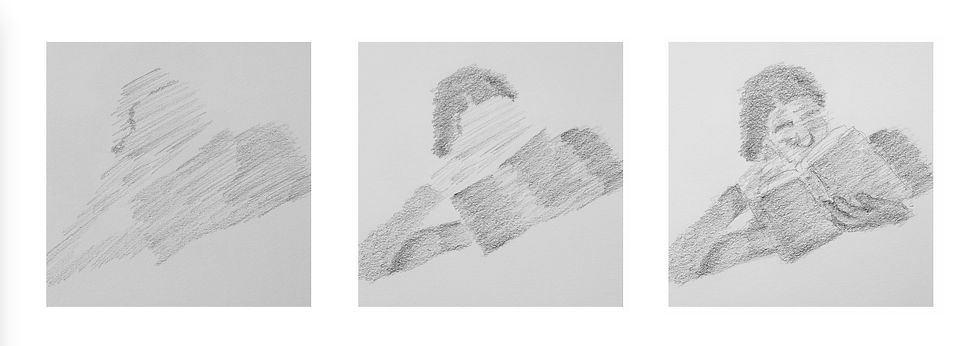
Rashidah, Assata, Ed, and Meridith work with reclining figures (self, others, feline, & clothing.)




Sudan and Pat opted to work with craypas in a layered approach that not only suits working up from a black ground, but very clearly shows us that they are really a sort of solid paint stick.

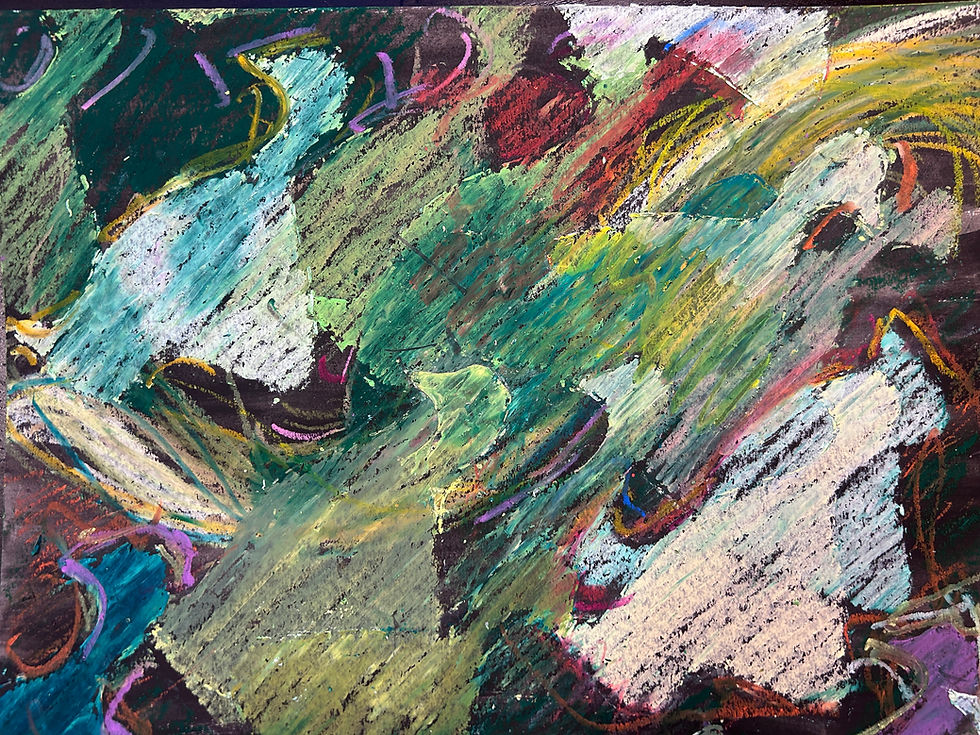
We noticed that while different in approach and method Cheyenne, Mich, and Fisola seem to mesmerize the viewer with the swooping lines of their artwork.


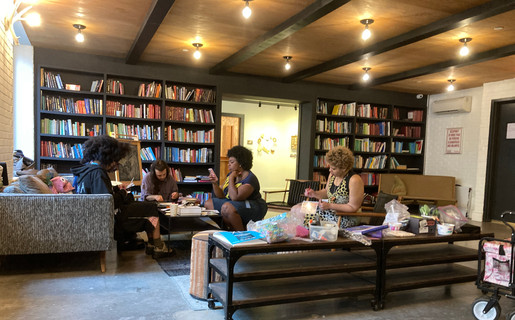
Art and activism can intertwine in concept and form with great results. This week in Advanced Studio in person at 180 Franklin Avenue AYB Artist Jules Lorenzo asked us to do just that as we created Endangered Species puppets inspired by the work of the Climate Awareness collective The Herds.
Jules recaps: “For this week’s lesson in Advanced Studio, we created paper puppets based off of endangered animals. In my lesson, No Strings to Hold Me Down, we learned a bit about puppet history, its multi-cultural impact, as well as how it’s been used for political commentary.





Utagawa Kunisada, 1857, Punch and Judy, and Les Grandes Personnes, aka the big people,of Boromo Africa.
The most famous modern American puppeteer was Jim Henson (1936–1990), who studied the puppet traditions of many parts of the world and combined techniques to create his “Muppets,” which became famous on TV and then in feature films. Some of the Muppets, like Kermit the Frog, operate like the Bunrakupuppets of Japan, as they are both hand puppets and rod puppets. "Henson’s more complex creations may combine several techniques, such as the use of strings like marionettes, pull cords operated by a person inside the puppet, or rods to make all the parts work" (libraryofcongress.gov).

A large part of the inspiration for this lesson came from Poncili Creación when I was doing research on Puerto Rican textile artists. I proceeded to get tangled in the fascinating world of puppetry and stumbled upon The Herds movement, which is a performance piece using puppetry to represent wildlife’s response to the climate crisis as species are forced to move north due to rising temperatures.
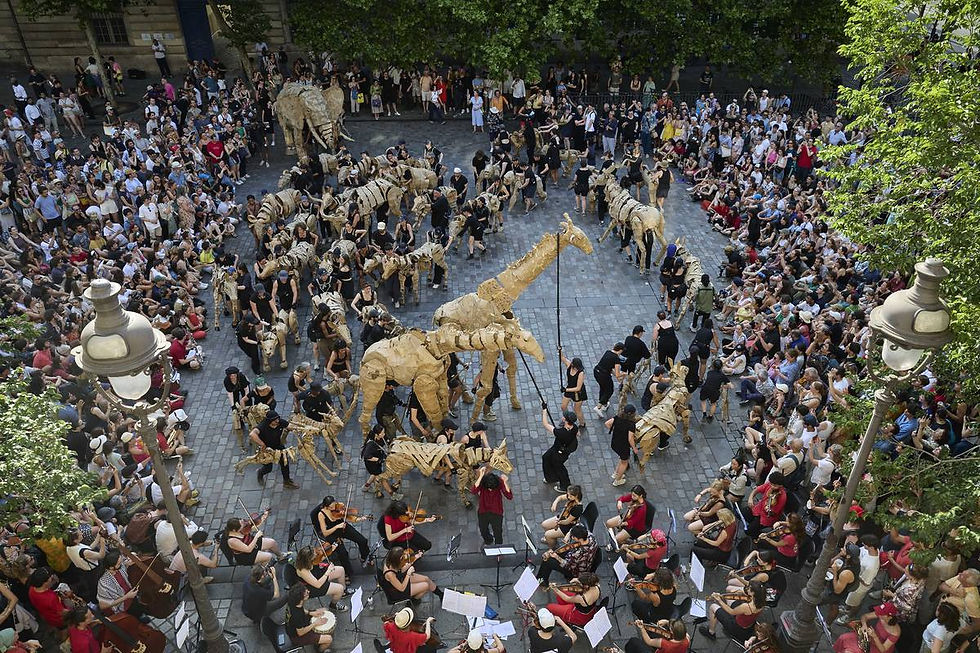
The Herds project was created by a theatre company called Little Walk after the success of Little Amal, a Syrian refugee puppet project about human migration and climate relocation. Their goal is to inspire people to think about the direct consequences of the climate crisis as the animal puppets travel from Africa to the Arctic. Puppeteers animate the life-size puppets in full view of the audience (Matt Smith, theconversation.com).
I had also begun my first foray into puppets a month ago when I created Penelope, which helped to spark further excitement for this lesson.
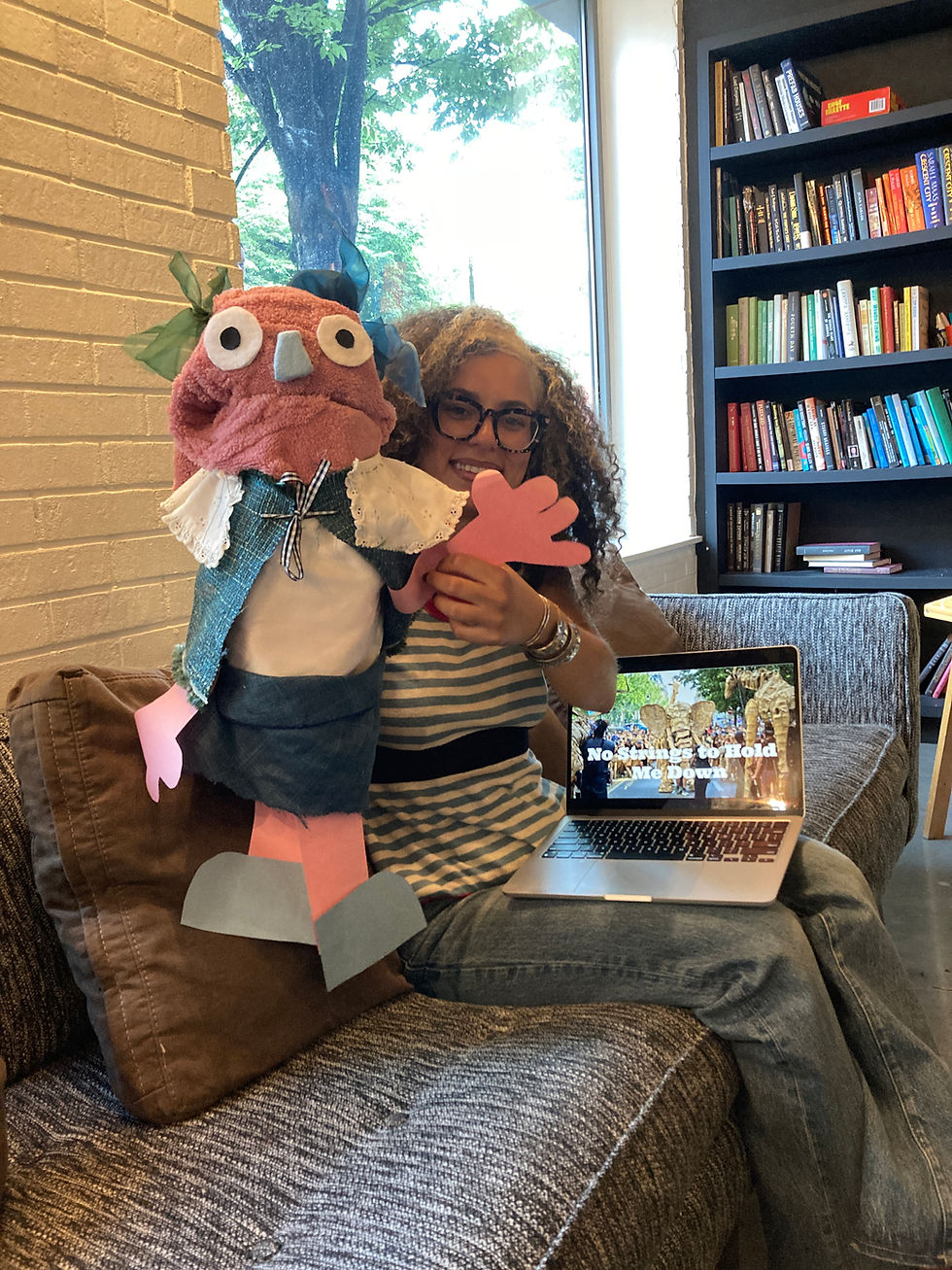
Per usual, participating artists got right to work, discussing their chosen animals as well as figuring out their process for how to bring them to life. We had a variety of tools at our disposal to aid in the fluidity and mobility of everyone’s creatures, whether that be through the use of pipe cleaners or paper brads (which I mistakenly called paper “brians” when I was trying to purchase them at the store).






We had a beautiful array of aquatic and land animals, as well as animals some of us had never even heard before. We had not one but TWO Pangolins. (Also big shout out to TJ Edgar for creating a wonderful stage to display our puppet pals!)
Both Ajani and Adji created Pangolins, Adji’s with a long tongue flicking out and Ajani’s with a functional body that could curl up into a ball for protection.




Ajani Russel and Adji Ngathe Kebe, Endangered Species Puppets
We got a bit buggy with a delicate fluttering Monarch Butterfly by Arthur and a Karner Blue Butterfly with a mesmerizing vibrant color palette by Elly.


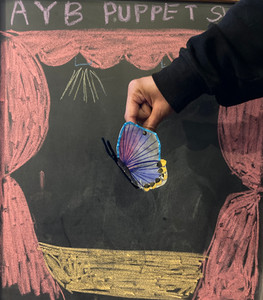
Arthur Katrina, and Elly Silberstein, Endangered Species Puppets
Both Chris and Amelia incorporated 3D elements into their puppets. This was depicted in Chris’ elephant’s trunk (and a tiny movable tail that sadly wasn’t pictured) as well as in Amelia’s African Penguin, which we dubbed a “party penguin.” It had a gleefully protruding multi-color beak, fuzzy black pipe cleaners running along the sides of its body to add more dimension, as well as confetti underneath its wings.




Chris Allen and Amelia Tineo, Endangered Species Puppets
Both Chrissy and I (Jules) created what are considered “living fossils.” I do believe in my heart that Chrissy’s Horseshoe Crab and my Sawfish would definitely be underwater besties.

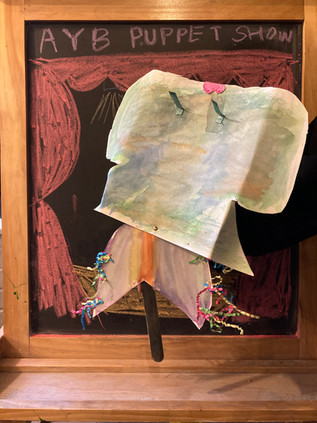


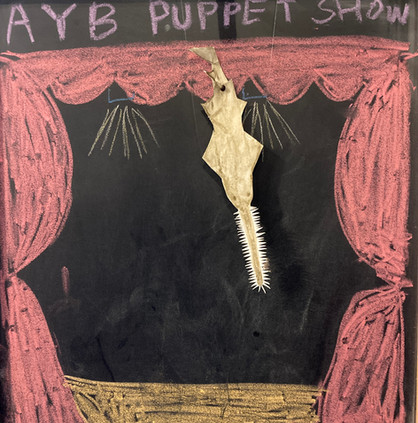
Chrissy Bisbee and Jules Lorenzo, Endangered Species Puppets
A few people added an additional layer of commentary to their pieces by creating animals that are endangered in New York. Maya’s Tiger Salamander and Meridith's Piping Plover are sadly both endangered in the big apple.


Maya Goldberg and Meridith McNeal, Endangered Species Puppets
Molly chose a blue whale for their graceful nature despite them being the largest mammal in the entire world.

Sebastian and Renee’s puppets were both inspired by animals based in their Caribbean roots. Sebastian’s Hispaniolan Solenodon is native to Haiti while Renee’s Iguana is native to Jamaica!


Sebastian Lebossiere and Renee Campbell, Endangered Species Puppets
Kevin’s puppet also took inspiration from personal experience, in which he paid homage to a Red Panda he used to care for.

During Vee’s description of their Axolotl, they explained how the mole salamander is often humanized because it appears as though they’re “smiling” due to the structure of their mouths. Also beautifully painted is the Holiday Darter (work in progress) by Kilala.


Vee Tineo and Kilala Ichie, Endangered Species Puppets
Both Mia and TJ got the itch to make multiple different puppets! Between the two of them we’d have half of the entire animal kingdom! Mia made a Silver Chub and a Gilt Darter while TJ made a Yangtze Finless Porpoise and Leatherback Sea Turtle. When TJ got home she kept the creativity flowing, making an Elephant, Indigo Macaw, and Manta Ray.





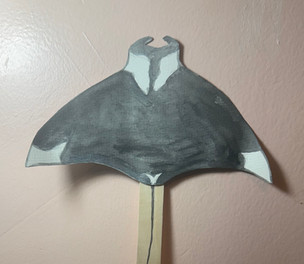
Mia Lew (l & ll) and TJ Edgar (l, lll, lV, & V), Endangered Species Puppets

Yet again, the work that comes out of our 2 hour sessions never ceases to amaze me!

“Now we see puppetry as a shape-shifting art form that draws from all others. It’s also highly effective for bringing impossible ideas into reality; how else can you represent fifty frogs on stage with a cast of two? It has an endless thirst for creativity. It’s also primitive and elemental and embedded in everyday life: puppets are tools; fashion is costume-making; texting is scriptwriting; socializing is performing. Every single act is ritualistic! Even if society is blind to it, puppets are everywhere.” - Pablo Del Hierro (Ruby Bunton, Bomb Magazine).
This week at ART YARD Art Matters at PS 17 there were several art projects in process! AYB Artist Evelyn Beliveau lead the students to great success!

Evelyn writes: “This week at PS 17, Grade 4 is entering the final stages of their sculpture project, Grade 7 is moving from sketches into final pieces, and Grades 1 and 2 are starting a new project. Time is flying as we approach the end of the school year, and Dennis, Chris, and I (Evelyn) are busy dreaming up installation plans for the art exhibition between and after classes.
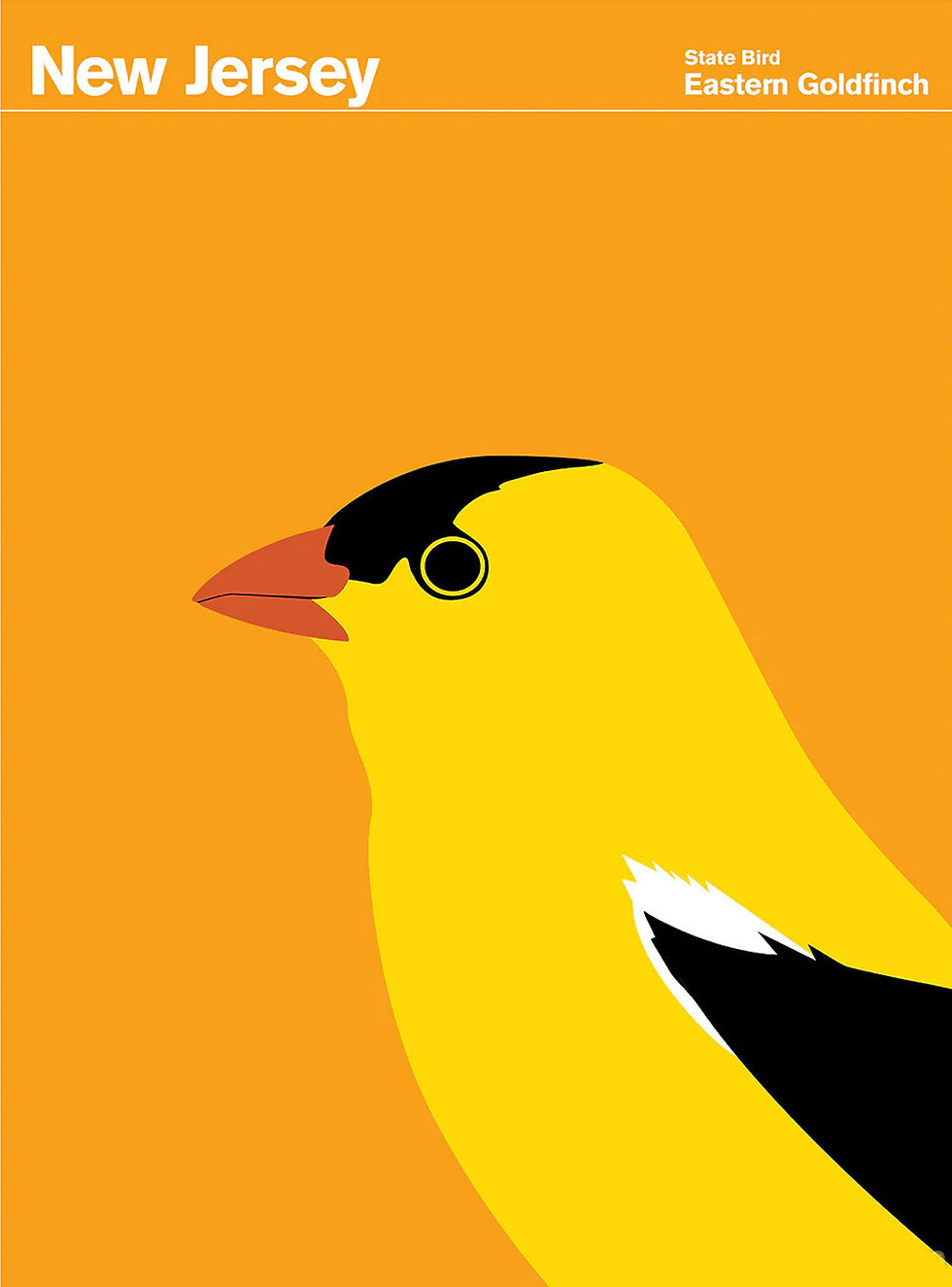
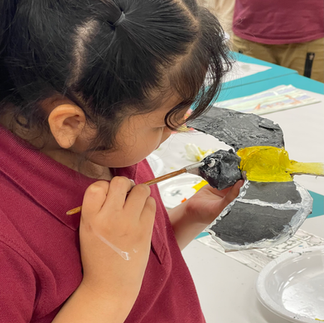
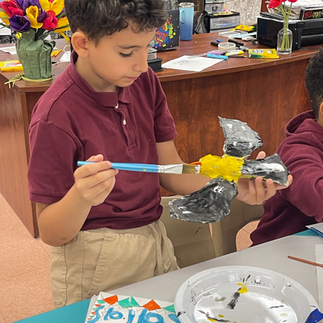
Grade 4 has been working on papier-mâché sculptures of goldfinches, the state bird of New Jersey. In the first two weeks, they applied papier-mâché to Styrofoam-and-cardboard armatures in the shape of a bird in flight. Then, last week, they began painting their sculptures with black, white, yellow, and orange acrylic paints, focusing on the tops of the wings (so the paint could dry without sticking to the plastic plates we are using to catch drips). This week, the painting continued on the remaining parts of the sculptures. Students blended colors to create the grays and tans visible on the underside of the goldfinch. Now, they are experienced painters, ready to list off the tips and tricks for effective painting and brush preservation with very little prompting. Their brilliant sculptures are just about ready to take flight.










With our Grade 7 class, we’re exploring the work of Jacob Lawrence with a collage project inspired by his lauded Migration Series. So far, students have viewed Lawrence’s paintings, background information from the Phillips Collection website (which now houses half of the paintings in the series), and a video of the artist speaking about his personal connection to the historical process he depicted in the series. Last week, we asked students to consider personal or family migration stories, or historical migrations that are meaningful to them. After verbal brainstorming (focusing on why people moved, what life was like before the move, the journey itself, and what life was like afterward) and thumbnail sketches, they were ready this week to begin their collages. Students have been challenged by this project: it’s not easy to visualize a moment from a story in a sketch, or to expand a sketch into a full-sized art piece. Our team circulated through the room, offering help with compositions, suggesting reference images a student could look up to help visualize a scene, and offering feedback on how to simplify a shape so it can be cut from paper. We are working in collage in order to emulate the abstract elements and hard-edged shapes that Lawrence employs. Most students progressed to the cutting-out stage and succeeded in gluing down at least one element from the scenes they chose.

Each of the 60 paintings in Jacob Lawrence’s Great Migration series is accompanied with a caption. For this panel, he wrote in 1941: “In every town Negroes were leaving by the hundreds to go North and enter into Northern industry.”


Grades 1 and 2 began a lesson titled Schools of Fish, in which they’ll make mixed-media artworks of colorful fish swimming through water. Many students already knew that a group of fish traveling together is called a school, but didn’t know that a group of fish moving in multiple different directions is called a shoal—new info for students and teachers alike! Students offered plenty of ideas about why fish travel in groups, such as for protection and “because they like each other.” We introduced the materials for this project with a science question: what happens when you mix oil and water? Students had guesses, but will find out next week when we use watercolor paints side by side with oil pastels. (This combination of media was inspired by a project I saw on view in the halls at another school—shout-out to the art teachers of Village Community School in Manhattan!) For this week, students chose among printed photos of fish that migrate and/or form schools, with names like wahoo, striped marlin, yellowfin tuna, powder blue tang, and bluestripe snapper. They drew the fish in pencil on watercolor paper, with step-by-step guidance from me, Chris, and Dennis for tricky details, then added color with oil pastels. Many students couldn’t help but add color to some of their background details, but I encouraged them to leave most of the background blank so they can discover what happens between the oil pastels and watercolors next week.

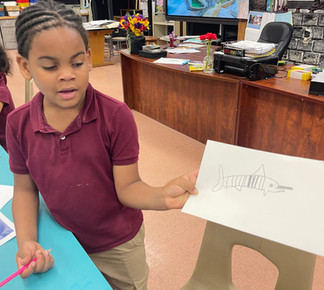


Students begin fish drawings
After classes, Dennis and I headed up to the library to assess the installation space for the seven projects students have worked on this year. As always, we will aim to feature as many students’ artworks as possible!”
Today in Jersey City AYB Artist Evelyn Belivear was back at the helm for ART YARD Art Matters at PS 6 and installation is underway in the gallery!
Dennis tells us about the day: “Lots of traveling this week at PS 6, one of our partnership schools in Jersey City - which included AYB team members commuting to Jersey City, and going up and down stairs carrying art to be installed in the library - but mostly Teaching Artist Evelyn Beliveau's fantastic lesson in room 314 called "A Train Through Time".

A class of 1st, 2nd, and 3rd graders were thrilled to know that they'd be painting trains with passenger cars from various decades. We send our presentations to the classroom teacher a few days prior to our meeting with the students - so they're prepped and enthusiastic. Kids love trains!



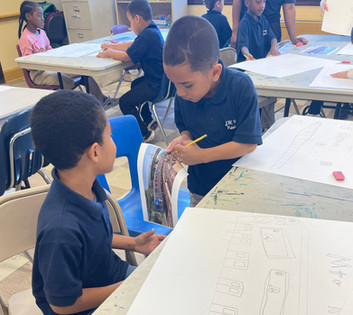


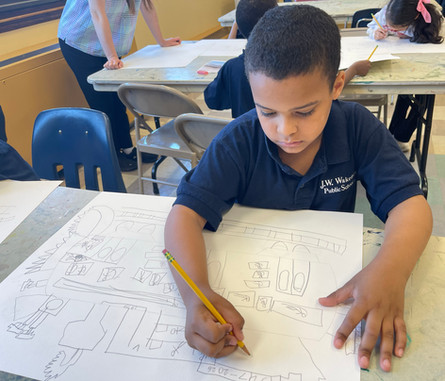
They learned about various types of trains, including the NYC subway and the NJ PATH lines, all the parts of different types of cars and engines - and what passenger trains were like at the onset of the second stage of the Industrial Revolution in the United States.

Evelyn set the scene for them by creating templates and every student received a large size (18x24) piece of watercolor paper - as always, the first day is creating a draft. We had the luxury of an extended class (90 minutes) which gave us sufficient time to draw and then start painting.
Evelyn offered a demonstration for those students who'd never used watercolors before. Many included passengers waving out of their windows, train cars with very many doors and windows, some with stars, hearts, and flowers - and some even named their train lines. Mr. Hamilton, their classroom teacher, always joins in with his students - this time naming his train the 205 (their class number!)

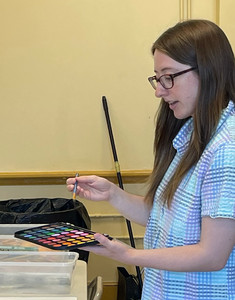


Evelyn demonstrating watercolor procedure and brush use
I couldn't help hearing the 1947 Oscar winning song "On The Atchison Topeka and the Santa Fe" from the MGM movie "The Harvey Girls" in my mind throughout the lesson.
While all this was going on in room 314, our AYB team of teaching artists started installing, in our gallery, the projects their students created. Nick installed the oil pastel works (which were ultimately animated) of migrating animals, Travis curated and installed the cardboard tenement houses, Jules hung the fabric collages, Chris created an excellent installation of paper mache shoes, and Evelyn assembled and hung the 'quilt' of self portraits and, assisted by Simone, the works of animals on toned tan paper based inspired by Ipcar's art. It's truly a team effort.


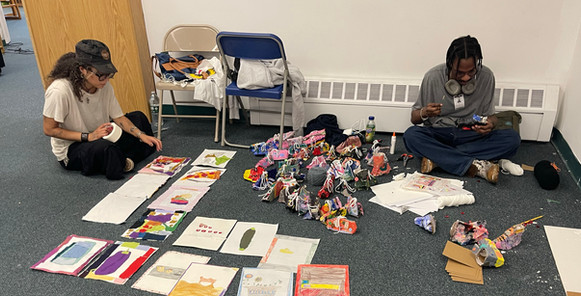




Installation is truly a team effort
We were visited by one of our 3rd grade classes who oohed and aahed over the process of installing - and 2 of our docents (training is this Tuesday), Kyle and Parv, were invited down to the gallery to see the installation in process and get an overall feeling of what being part of an art exhibit fully means. They were great - they improvised explaining the tenement project (pretending that I was a visitor) and I have no doubt that they will be eloquent and knowledgeable at the exhibition opening next week.


It was a long day - I wish the Chattanooga Choo-Choo could have come to Jersey City to choo-choo me home."

Other Art News
Congratulations to AYB Artist Evelyn Beliveau who has work on view in The Ordinary, a Pride Month Group Show at Collective Z Gallery, 325 Broome St # 1W, NYC. Evelyn invites us to join them at the opening Thursday, June 4, 6-9pm.

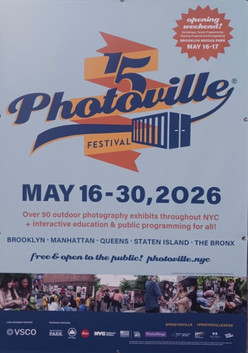
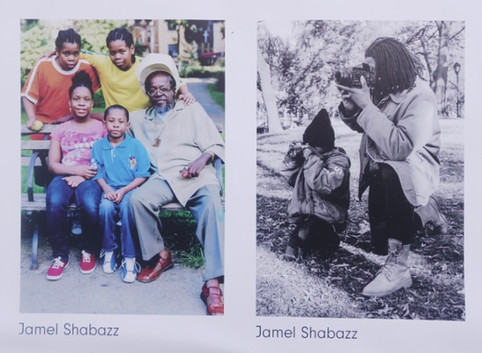
Framing Fatherhood: A Celebration of Black Fathers on view through tomorrow Saturday, May 30th in 15 Photoville Festival at Empire State Park in DUMBO comes recommended by AYB Artist Jacob Rath! Note there is work included by AYB favorite Jamel Shabazz!




What we are reading
Born to British ex-pat parents in France in 1856, Vernon Lee (Violet Paget) lived most of their life in Italy. A feminist and pacifist, s/he published essays on art, music, and travel. Lee also played the harpsichord and was considered an authority on the Italian Renaissance. Plus, John Singer Sargent painted a fantastic portrait of them in 1881!
This week I read Vernon Lee’s Hauntings (reprint - Trade Paperback, 2025), a collection of four ghost stories originally published by William Heinemann in 1890. “Once described by Henry James as being ‘as dangerous and uncanny as she is intelligent,’ Vernon Lee's ghost stories haunt as much as they reveal an obsession with art, architecture, and deadly, queer desires.” (from the book promo material) If you are into the genre, I expect you will appreciate Hauntings!




Book cover and Lola (photo by Meridith McNeal) and John Singer Sargent, Vernon Lee, 1881
Mark Segal, And Then I Danced: Traveling the Road to LGBT Equality (Open Lens, 2015). I am about three-quarters of the way through this well-written and engaging memoir by one of those who was in the crowd at the Stonewall Inn during those pivotal three days in June 1969. An early champion of the Gay Youth movement and lifelong queer activist, Segal is a cracker-jack storyteller who knows how to engage the reader. As we usher in Gay Pride Month, this is a great title to add to your reading list.

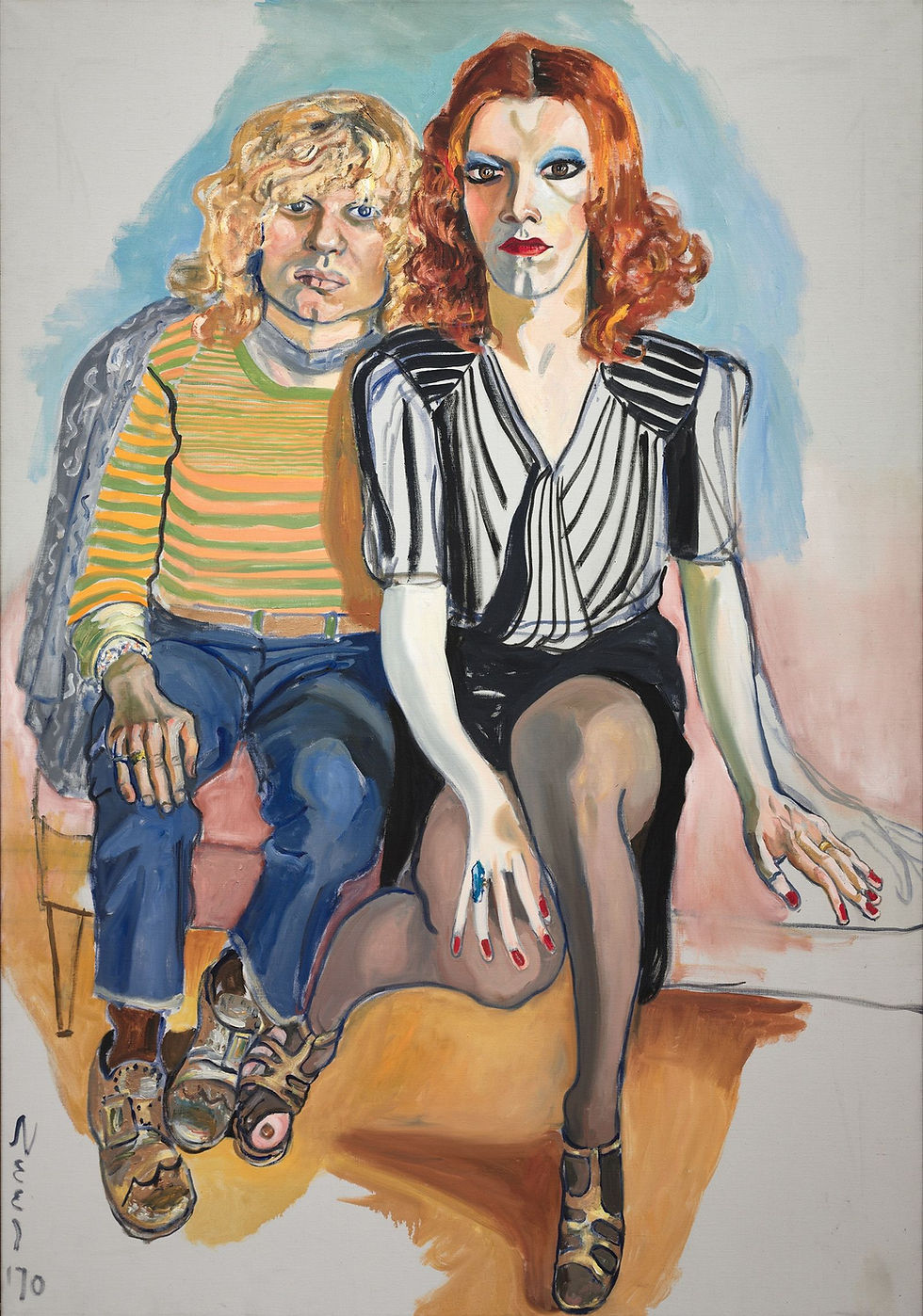
Nothing Is Lost: Selected Essays of Ingrid Sischy (Knopf, 2028) is a collection of essays by cultural critic Ingrid Sischy. Several of the essays offer insightful personal experiences with artists she knew personally, including Alice Neel, Cindy Sherman, Francesco Clemente, and Robert Mapplethorpe. I appreciated Sischy’s enthusiastic and thoughtful musings. The essays were all originally written for print in publications such as The New Yorker, The New York Times, and Vanity Fair. While I was less interested in the film and fashion portraits, that is simply a matter of preference; they are all strong.
♥️🧡💛💚🩵💙💜


Comments